Important Safety Information
GLP-1 agonists, including Wegovy®, Zepbound®, and Saxenda®, may
cause serious side effects including possible thyroid tumors,
including cancer. Do not use these medications if you or any of your family have ever had
a type of thyroid cancer called medullary thyroid carcinoma (MTC) or if
you have Multiple Endocrine Neoplasia syndrome type 2 (MEN 2). Do not use
a GLP-1 agonist if you have had a serious allergic reactions to Wegovy®
(semaglutide), Zepbound® (tirzepatide) or Saxenda® (liraglutide) or any
of the ingredients in these medications.
Quick links:
Wegovy® Zepbound® Saxenda®
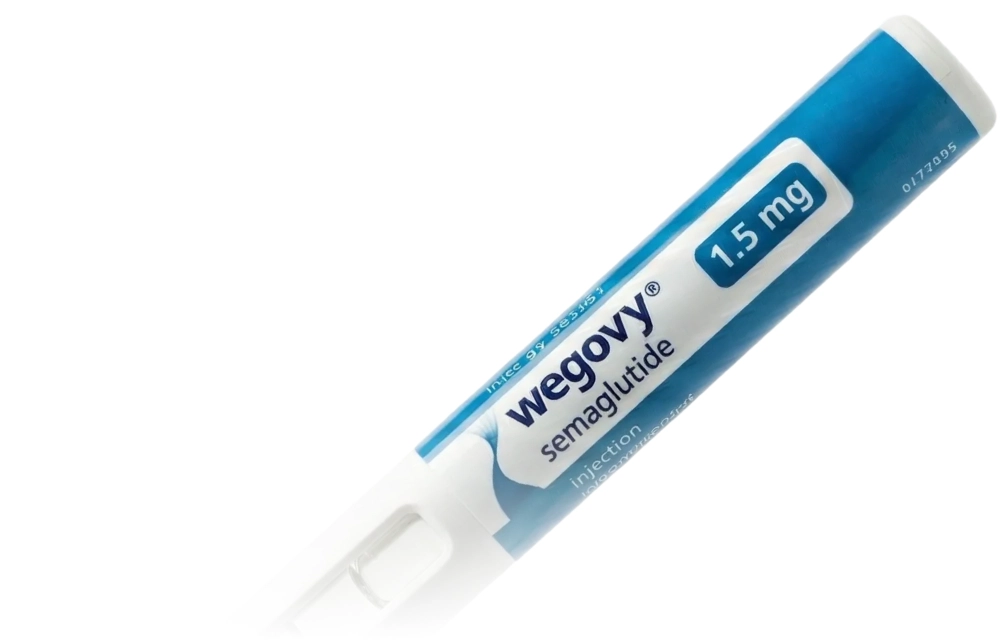
Wegovy®
What is Wegovy®?
Wegovy® (semaglutide) injection 1.7 mg or 2.4 mg and Wegovy®
(semaglutide) tablets 25 mg are prescription medicines used with a
reduced calorie diet and increased physical activity to:
-
reduce the risk of major cardiovascular events such as death, heart
attack, or stroke in adults with known heart disease and with either
obesity or overweight.
-
help adults with obesity, or some adults with excess weight
(overweight) who also have weight-related medical problems to lose
weight and keep the weight off.
Wegovy® (semaglutide) injection 1.7 mg or 2.4 mg is used with a
reduced-calorie diet and increased physical activity to help children
12 years and older with obesity to lose weight and keep the weight off
Wegovy® contains semaglutide and should not be used with other
semaglutide-containing products or other GLP-1 receptor agonist
medicines.
It is not known if Wegovy® is safe and effective for use:
-
to reduce the risk of major cardiovascular events (death, heart
attack, or stroke) in people under 18 years
-
to help children under 12 years of age lose weight and keep the
weight off
It is not known if Wegovy® tablets are safe and effective for use in
people under 18 years of age.
Important safety information
What is the most important information I should know about Wegovy®?
Wegovy® may cause serious side effects, including:
- Possible thyroid tumors, including cancer. Tell your healthcare provider if you get a lump or swelling in your
neck, hoarseness, trouble swallowing, or shortness of breath. These may
be symptoms of thyroid cancer. In studies with rodents, Wegovy® and
medicines that work like Wegovy® caused thyroid tumors, including thyroid
cancer. It is not known if Wegovy® will cause thyroid tumors or a type
of thyroid cancer called medullary thyroid carcinoma (MTC) in people
-
Do not use Wegovy® if you or any of your family have ever had a
type of thyroid cancer called medullary thyroid carcinoma (MTC) or
if you have an endocrine system condition called Multiple Endocrine
Neoplasia syndrome type 2 (MEN 2)
Do not use Wegovy® if:
-
you or any of your family have ever had a type of thyroid cancer
called medullary thyroid carcinoma (MTC) or if you have an endocrine
system condition called Multiple Endocrine Neoplasia syndrome type 2
(MEN 2)
-
you have had a serious allergic reaction to semaglutide or any of
the ingredients in Wegovy® injection or Wegovy® tablets. See
symptoms of serious allergic reaction in "What are the possible side effects of Wegovy®?"
Before using Wegovy®, tell your healthcare provider if you have any
other medical conditions, including if you:
- have or have had problems with your pancreas or kidneys
- have type 2 diabetes and a history of diabetic retinopathy
-
have or have had depression, suicidal thoughts, or mental health
issues
-
are scheduled to have surgery or other procedures that use
anesthesia or deep sleepiness (deep sedation)
-
are pregnant or plan to become pregnant. Wegovy® may harm your
unborn baby. You should stop using Wegovy® 2 months before you plan
to become pregnant
-
are breastfeeding or plan to breastfeed. Breastfeeding is not
recommended during treatment with Wegovy® tablets. It is not known
if Wegovy® when received through an injection passes into your
breast milk
Tell your healthcare provider about all the medicines you take,
including prescription and over-the-counter medicines, vitamins, and herbal
supplements. Wegovy® may affect the way some medicines work and some medicines
may affect the way Wegovy® works. Tell your healthcare provider if you
are taking other medicines to treat diabetes, including sulfonylureas or
insulin. Wegovy® slows stomach emptying and can affect medicines that
need to pass through the stomach quickly.
If you are on thyroid hormone replacement treatment,
please notify your provider as closer monitoring and treatment adjustment
may be needed when starting an oral semaglutide.
What are the possible side effects of Wegovy®?
Wegovy® may cause serious side effects, including:
- inflammation of your pancreas (pancreatitis). Stop using
Wegovy® and call your healthcare provider right away if you have severe
pain in your stomach area (abdomen) that will not go away, with or without
nausea or vomiting. Sometimes you may feel the pain from your abdomen
to your back
- gallbladder problems. Wegovy® may cause gallbladder
problems, including gallstones. Some gallstones may need surgery. Call
your healthcare provider if you have symptoms, such as pain in your upper
stomach (abdomen), fever, yellowing of the skin or eyes (jaundice), or
clay-colored stools
- increased risk of low blood sugar (hypoglycemia), especially
those who also take medicines for diabetes such as insulin or
sulfonylureas.
This can be a serious side effect. Talk to your healthcare provider about
how to recognize and treat low blood sugar and check your blood sugar
before you start and while you take Wegovy®. Signs and symptoms of low
blood sugar may include dizziness or light-headedness, blurred vision,
anxiety, irritability or mood changes, sweating, slurred speech, hunger,
confusion or drowsiness, shakiness, weakness, headache, fast heartbeat,
or feeling jittery
- dehydration leading to kidney problems. Diarrhea, nausea,
and vomiting may cause a loss of fluids (dehydration), which may cause
kidney problems. It is important for you to drink fluids to help reduce
your chance of dehydration. Tell your healthcare provider right away
if you have nausea, vomiting, or diarrhea that does not go away
- severe stomach problems. Stomach problems, sometimes
severe, have been reported in people who use Wegovy®. Tell your healthcare
provider if you have stomach problems that are severe or will not go
away
- serious allergic reactions. Stop using Wegovy® and
get medical help right away, if you have any symptoms of a serious allergic
reaction, including swelling of your face, lips, tongue, or throat; problems
breathing or swallowing; severe rash or itching; fainting or feeling
dizzy; or very rapid heartbeat
- change in vision in people with type 2 diabetes. Tell
your healthcare provider if you have changes in vision during treatment
with Wegovy®
- increased heart rate. Wegovy® can increase your heart
rate while you are at rest. Tell your healthcare provider if you feel
your heart racing or pounding in your chest and it lasts for several
minutes
- depression or thoughts of suicide. You should pay attention
to any mental changes, especially sudden changes in your mood, behaviors,
thoughts, or feelings. Call your healthcare provider right away if you
have any mental changes that are new, worse, or worry your.
- food or liquid getting into the lungs during surgery or other
procedures that use anesthesia or deep sleepiness (deep sedation).Wegovy® may increase the chance of food getting into your lungs
during surgery or other procedures. Tell all your healthcare
providers that you are taking Wegovy® before you are scheduled to
have surgery or other procedures
The most common side effects of Wegovy® may include:
nausea, diarrhea, vomiting, constipation, stomach (abdomen) pain, headache,
tiredness (fatigue), upset stomach, dizziness, feeling bloated, belching,
low blood sugar in people with type 2 diabetes, gas, stomach flu, heartburn,
and runny nose or sore throat.
Please see Prescribing Information and Medication Guide for Wegovy®.
Wegovy® is a prescription medication.
You are encouraged to report negative side effects of prescription
drugs to the FDA. Visit www.fda.gov/medwatch, or call 1-800-FDA-1088.
This site is intended for US patients only.
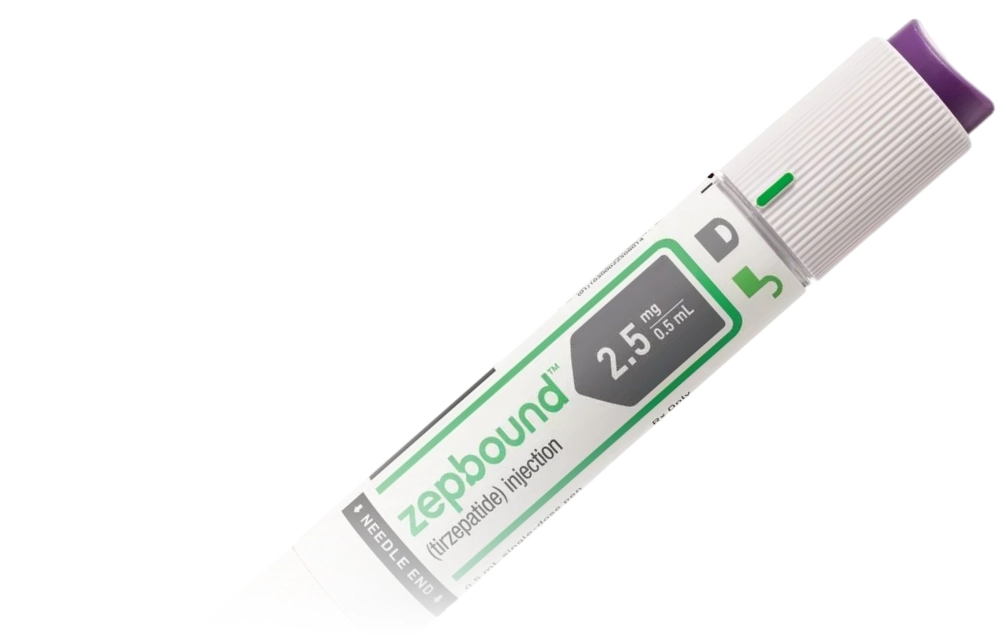
Zepbound®
Indications
Zepbound® (tirzepatide) is an injectable prescription medicine that
may help adults with:
-
obesity, or some adults with overweight who also have weight-related
medical problems to lose excess body weight and keep the weight off.
-
moderate-to-severe obstructive sleep apnea (OSA) and obesity to
improve their OSA.
It should be used with a reduced-calorie diet and increased physical
activity.
Zepbound contains tirzepatide and should not be used with other
tirzepatide-containing products or any GLP-1 receptor agonist
medicines. It is not known if Zepbound is safe and effective for use
in children.
Safety summary with warnings
Warnings - Zepbound may cause tumors
in the thyroid, including thyroid cancer. Watch for possible symptoms,
such as a lump or swelling in the neck, hoarseness, trouble swallowing,
or shortness of breath. If you have any of these symptoms, tell your healthcare
provider.
-
Do not use Zepbound if you or any of your family have ever had a
type of thyroid cancer called medullary thyroid carcinoma (MTC).
-
Do not use Zepbound if you have Multiple Endocrine Neoplasia
syndrome type 2 (MEN 2).
-
Do not use Zepbound if you have had a serious allergic reaction to
tirzepatide or any of the ingredients in Zepbound.
Zepbound may cause serious side effects, including:
Severe stomach problems. Stomach
problems, sometimes severe, have been reported in people who use Zepbound.
Tell your healthcare provider if you have stomach problems that are severe
or will not go away.
Kidney problems (kidney failure). Diarrhea, nausea, and vomiting may cause a loss of fluids (dehydration),
which may cause kidney problems. It is important for you to drink fluids
to help reduce your chance of dehydration.
Gallbladder problems. Gallbladder
problems have happened in some people who use Zepbound. Tell your healthcare
provider right away if you get symptoms of gallbladder problems, which
may include pain in your upper stomach (abdomen), fever, yellowing of skin
or eyes (jaundice), or clay-colored stools.
Inflammation of the pancreas (pancreatitis). Stop using Zepbound and call your healthcare provider right away if you
have severe pain in your stomach area (abdomen) that will not go away,
with or without vomiting. You may feel the pain from your abdomen to your
back.
Serious allergic reactions. Stop
using Zepbound and get medical help right away if you have any symptoms
of a serious allergic reaction, including swelling of your face, lips,
tongue or throat, problems breathing or swallowing, severe rash or itching,
fainting or feeling dizzy, or very rapid heartbeat.
Low blood sugar (hypoglycemia).
Your risk for getting low blood sugar may be higher if you use
Zepbound with medicines that can cause low blood sugar, such as a sulfonylurea
or insulin.
Signs and symptoms of low blood sugar may include dizziness or light-headedness, sweating, confusion or drowsiness,
headache, blurred vision, slurred speech, shakiness, fast heartbeat, anxiety,
irritability, mood changes, hunger, weakness or feeling jittery.
Changes in vision in patients with type 2 diabetes.
Tell your healthcare provider if you have changes in vision during
treatment with Zepbound.
Depression or thoughts of suicide.
You should pay attention to changes in your mood, behaviors,
feelings or thoughts. Call your healthcare provider right away if you have
any mental changes that are new, worse, or worry you.
Food or liquid getting into the lungs during surgery or other
procedures that use anesthesia or deep sleepiness (deep sedation).
Zepbound may increase the chance of food getting into your lungs
during surgery or other procedures. Tell all your healthcare providers
that you are taking Zepbound before you are scheduled to have surgery or
other procedures.
Common side effects
The most common side effects of Zepbound include nausea, diarrhea,
vomiting, constipation, stomach (abdominal) pain, indigestion,
injection site reactions, feeling tired, allergic reactions, belching,
hair loss, and heartburn. These are not all the possible side effects
of Zepbound. Talk to your healthcare provider about any side effect
that bothers you or doesn’t go away.
Tell your doctor if you have any side effects. You can report side
effects at 1-800-FDA-1088 or www.fda.gov/medwatch.
Before using Zepbound
-
Your healthcare provider should show you how to use Zepbound before
you use it for the first time.
-
Tell your healthcare provider if you are taking medicines to treat
diabetes including an insulin or sulfonylurea which could increase
your risk of low blood sugar. Talk to your healthcare provider about
low blood sugar levels and how to manage them.
- If you take birth control pills by mouth, talk to your healthcare
provider before you use Zepbound. Birth control pills may not work
as well while using Zepbound.Your healthcare provider may recommend another type of birth
control for 4 weeks after you start Zepbound and for 4 weeks after
each increase in your dose of Zepbound.
Review these questions with your healthcare provider:
- ❑
Do you have other medical conditions, including problems with your
pancreas or kidneys, or severe problems with your stomach, such as
slowed emptying of your stomach (gastroparesis) or problems
digesting food?
- ❑
Do you take diabetes medicines, such as insulin or sulfonylureas?
- ❑
Do you have a history of diabetic retinopathy?
- ❑
Are you scheduled to have surgery or other procedures that use
anesthesia or deep sleepiness (deep sedation)?
- ❑
Do you take any other prescription medicines or over-the-counter
drugs, vitamins, or herbal supplements?
- ❑
Are you pregnant, plan to become pregnant, breastfeeding, or plan
to breastfeed? Zepbound may harm your unborn baby. Tell your
healthcare provider if you become pregnant while using Zepbound.
It is not known if Zepbound passes into your breast milk. You
should talk with your healthcare provider about the best way to
feed your baby while using Zepbound.
- Pregnancy Exposure Registry: There
will be a pregnancy exposure registry for women who have taken Zepbound
during pregnancy. The purpose of this registry is to collect information
about the health of you and your baby. Talk to your healthcare provider
about how you can take part in this registry, or you may contact Lilly
at 1-800-LILLYRX (1-800-545-5979).
How to take
- Read the Instructions for Use that come with Zepbound.
- Use Zepbound exactly as your healthcare provider says.
-
Use Zepbound with a reduced-calorie diet and increased physical
activity.
-
Zepbound is injected under the skin (subcutaneously) of your stomach
(abdomen), thigh, or upper arm.
-
Use Zepbound 1 time each week, at any time of the day.
-
Change (rotate) your injection site with each weekly injection. Do not
use the same site for each injection.
-
If you take too much Zepbound, call your healthcare provider, seek
medical advice promptly, or contact a Poison Center expert right
away at 1-800-222-1222.
Zepbound injection is approved as a 2.5 mg, 5 mg, 7.5 mg, 10 mg, 12.5
mg, or 15 mg per 0.5 mL in single-dose pen or single-dose vial.
Learn more
Zepbound is a prescription medicine. For more information, call
1-800-LILLYRX (1-800-545-5979).
This summary provides basic information about Zepbound but does not
include all information known about this medicine. Read the
information that comes with your prescription each time your
prescription is filled. This information does not take the place of
talking with your healthcare provider. Be sure to talk to your
healthcare provider about Zepbound and how to take it. Your healthcare
provider is the best person to help you decide if Zepbound is right
for you.
ZP CON BS 20DEC2024
Zepbound® and its delivery device base are registered trademarks
owned or licensed by Eli Lilly and Company, its subsidiaries, or
affiliates.
Indication and important safety information
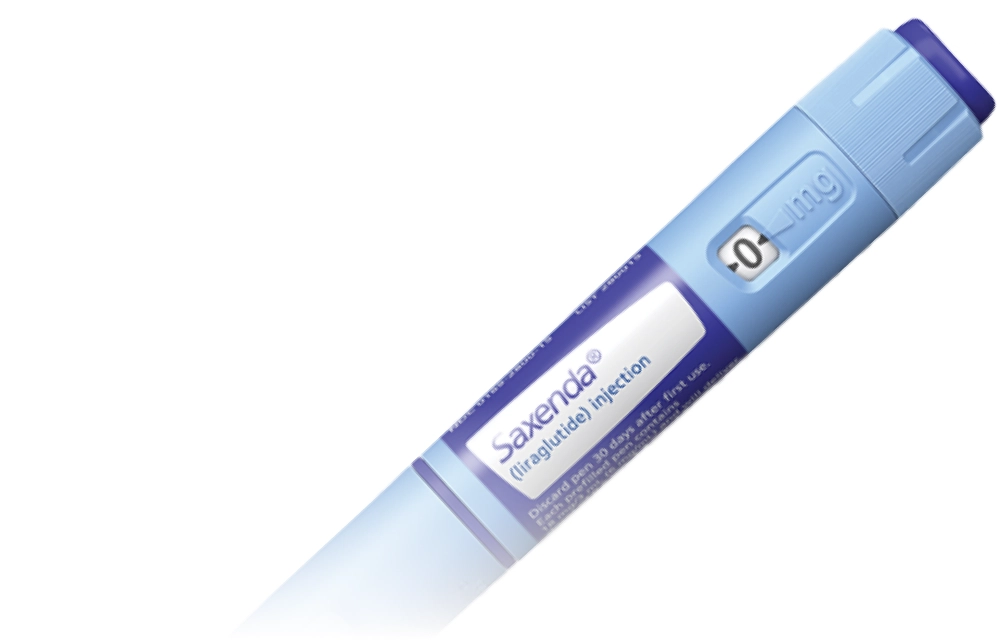
What is the most important information I should know about Saxenda®?
Serious side effects may happen in people who take Saxenda®, including:
Possible thyroid tumors, including cancer. Tell your health care
professional if you get a lump or swelling in your neck, hoarseness,
trouble swallowing, or shortness of breath. These may be symptoms of
thyroid cancer. In studies with rats and mice, Saxenda® and medicines
that work like Saxenda® caused thyroid tumors, including thyroid
cancer. It is not known if Saxenda® will cause thyroid tumors or a type
of thyroid cancer called medullary thyroid carcinoma (MTC) in people. Do
not use Saxenda® if you or any of your family have ever had MTC, or if
you have an endocrine system condition called Multiple Endocrine
Neoplasia syndrome type 2 (MEN 2).
Who should not use Saxenda®?
Do not use Saxenda® if:
-
you or any of your family have ever had MTC or if you have MEN 2
-
you have had a serious allergic reaction to liraglutide or any of the
ingredients in Saxenda®. See symptoms of serious allergic reactions
in "What are the possible side effects of Saxenda®?"
Before taking Saxenda®, tell your health care provider about all of
your medical conditions, including if you:
- have or have had problems with your pancreas
-
have severe problems with your stomach, such as slowed emptying of
your stomach (gastroparesis) or problems with digesting food
-
are scheduled to have surgery or other procedures that use anesthesia
or deep sleepiness (deep sedation)
-
have or have had depression or suicidal thoughts, or mental health
issues issues
-
are breastfeeding or plan to breastfeed. It is not known if Saxenda®
passes into your breast milk. You and your health care provider should
decide if you will use Saxenda® or breastfeed
Tell your health care provider about all the medicines you take,
including prescription, over-the-counter medicines, vitamins, and herbal
supplements. Saxenda® may affect the way some medicines work and some
other medicines may affect the way Saxenda® works. Tell your health
care provider if you take diabetes medicines, especially insulin and
sulfonylurea medicines.
How should I use Saxenda®?
Saxenda® may cause serious side effects, including:
-
inflammation of the pancreas (pancreatitis). Stop using Saxenda® and
call your healthcare provider right away if you have severe pain in
your stomach area (abdomen) that will not go away, with or without
vomiting. You may feel the pain from your stomach area (abdomen) to
your back
-
increased risk of low blood sugar (hypoglycemia) in adults with type 2
diabetes especially those who also take medicines to treat type 2
diabetes such as sulfonylureas or insulin
-
risk of low blood sugar (hypoglycemia) in children who are 12 years of
age and older without type 2 diabetes. Signs and symptoms of low blood
sugar may include: dizziness or light-headedness, blurred vision,
anxiety, irritability or mood changes, sweating, slurred speech,
hunger, confusion or drowsiness, shakiness, weakness, headache, fast
heartbeat, and feeling jittery. You should check your blood sugar
before you start taking Saxenda® and while you take Saxenda®
-
increased heart rate. Saxenda® can increase your heart rate while you
are at rest. Your health care provider should check your heart rate
while you take Saxenda®. Tell your health care professional if you
feel your heart racing or pounding in your chest and it lasts for
several minutes
-
dehydration leading to kidney problems. Diarrhea, nausea, and vomiting
may cause a loss of fluids (dehydration) which may cause kidney
problems. It is important for you to drink fluids to help reduce your
chance of dehydration. Tell your healthcare provider right away if you
have nausea, vomiting, or diarrhea that does not go away
-
severe stomach problems. Stomach problems, sometimes severe, have been
reported in people who use Saxenda®. Tell your healthcare provider if
you have stomach problems that are severe or will not go away
-
serious allergic reactions. Stop using Saxenda® and get medical help
right away if you have any symptoms of a serious allergic reaction
including swelling of your face, lips, tongue, or throat, fainting or
feeling dizzy, very rapid heartbeat, problems breathing or swallowing,
or severe rash or itching
-
gallbladder problems. Saxenda® may cause gallbladder problems
including gallstones. Some gallbladder problems need surgery. Call
your healthcare provider if you have any of the following symptoms:
pain in your upper stomach (abdomen), fever, yellowing of your skin or
eyes (jaundice), or clay-colored stools
-
depression or thoughts of suicide. You should pay attention to any
mental changes, especially sudden changes, in your mood, behaviors,
thoughts, or feelings. Call your health care provider right away if
you have any mental changes that are new, worse, or worry you
-
food or liquid getting into the lungs during surgery or other
procedures that use anesthesia or deep sleepiness (deep sedation).
Saxenda® may increase the chance of food getting into your lungs
during surgery or other procedures. Tell all your healthcare providers
that you are taking Saxenda® before you are scheduled to have surgery
or other procedures
The most common side effects of Saxenda® in adults include nausea,
diarrhea, constipation, vomiting, injection site reaction, low blood
sugar (hypoglycemia), headache, tiredness (fatigue), dizziness, stomach
pain, and change in enzyme (lipase) levels in your blood. Additional
common side effects in children are fever and gastroenteritis.
Please click here for Prescribing Information
and Medication Guide for Saxenda®.
Saxenda® is a prescription medication.
You are encouraged to report negative side effects of prescription drugs
to the FDA. Visit www.fda.gov/medwatch, or call 1-800-FDA-1088.























 Wegovy® Pill
  Wegovy® Pen
 '%3e%3cpath%20d='M45.7064%2016.0279C26.3611%20-1.51388%20-11.1914%207.07588%20-11.1914%207.07588V223.81H614.684V146.876C614.684%20146.876%20583.025%20132.727%20557.786%20127.802C532.548%20122.876%20525.702%20118.555%20500.888%20124.15C476.074%20129.745%20468.172%20138.503%20443.991%20138.503C419.809%20138.503%20406.438%20132.528%20387.093%20125.617C367.748%20118.706%20349.54%20118.954%20330.195%20106.919C310.85%2094.8832%20297.479%2063.4039%20273.297%2063.4039C249.116%2063.4039%20240.581%2075.5515%20216.4%2075.5515C192.218%2075.5515%20183.683%2044.3297%20159.502%2044.3297C135.32%2044.3297%20126.786%2051.7334%20102.604%2051.7334C78.4226%2051.7334%2065.0516%2033.5697%2045.7064%2016.0279Z'%20fill='url(%23paint0_linear_3522_34632)'/%3e%3cg%20filter='url(%23filter0_d_3522_34632)'%3e%3cpath%20d='M-11.1914%208.38884C-11.1914%208.38884%2026.3611%20-1.51358%2045.7064%2016.0282C65.0516%2033.57%2078.4226%2051.7337%20102.604%2051.7337C126.786%2051.7337%20135.32%2044.33%20159.502%2044.33C183.683%2044.33%20192.218%2075.5518%20216.4%2075.5518C240.581%2075.5518%20249.116%2063.4042%20273.297%2063.4042C297.479%2063.4042%20310.85%2094.8835%20330.195%20106.919C349.54%20118.954%20367.748%20118.707%20387.093%20125.618C406.438%20132.529%20419.809%20138.503%20443.991%20138.503C468.172%20138.503%20479.584%20128.304%20500.888%20124.15C522.193%20119.996%20533.133%20122.877%20557.786%20127.802C582.44%20132.727%20614.684%20146.876%20614.684%20146.876'%20stroke='%23F9B694'%20stroke-width='2'/%3e%3c/g%3e%3ccircle%20cx='45.7068'%20cy='15.1255'%20r='4.69992'%20fill='%23F9B694'%20stroke='%23FEF4F1'%20stroke-width='2'/%3e%3ccircle%20cx='102.604'%20cy='51.7337'%20r='4.69992'%20fill='%23F9B694'%20stroke='%23FEF4F1'%20stroke-width='2'/%3e%3ccircle%20cx='159.502'%20cy='43.5702'%20r='4.69992'%20fill='%23F9B694'%20stroke='%23FEF4F1'%20stroke-width='2'/%3e%3ccircle%20cx='216.399'%20cy='75.552'%20r='4.69992'%20fill='%23F9B694'%20stroke='%23FEF4F1'%20stroke-width='2'/%3e%3ccircle%20cx='273.298'%20cy='63.4041'%20r='4.69992'%20fill='%23F9B694'%20stroke='%23FEF4F1'%20stroke-width='2'/%3e%3ccircle%20cx='330.195'%20cy='107.821'%20r='4.69992'%20fill='%23F9B694'%20stroke='%23FEF4F1'%20stroke-width='2'/%3e%3ccircle%20cx='387.092'%20cy='125.618'%20r='4.69992'%20fill='%23F9B694'%20stroke='%23FEF4F1'%20stroke-width='2'/%3e%3ccircle%20cx='443.991'%20cy='138.503'%20r='4.69992'%20fill='%23F9B694'%20stroke='%23FEF4F1'%20stroke-width='2'/%3e%3ccircle%20cx='500.888'%20cy='124.222'%20r='4.69992'%20fill='%23F9B694'%20stroke='%23FEF4F1'%20stroke-width='2'/%3e%3ccircle%20cx='557.786'%20cy='127.945'%20r='4.69992'%20fill='%23F9B694'%20stroke='%23FEF4F1'%20stroke-width='2'/%3e%3c/g%3e%3cdefs%3e%3cfilter%20id='filter0_d_3522_34632'%20x='-31.4453'%20y='-11.3959'%20width='666.53'%20height='183.188'%20filterUnits='userSpaceOnUse'%20color-interpolation-filters='sRGB'%3e%3cfeFlood%20flood-opacity='0'%20result='BackgroundImageFix'/%3e%3cfeColorMatrix%20in='SourceAlpha'%20type='matrix'%20values='0%200%200%200%200%200%200%200%200%200%200%200%200%200%200%200%200%200%20127%200'%20result='hardAlpha'/%3e%3cfeOffset%20dy='4'/%3e%3cfeGaussianBlur%20stdDeviation='10'/%3e%3cfeComposite%20in2='hardAlpha'%20operator='out'/%3e%3cfeColorMatrix%20type='matrix'%20values='0%200%200%200%200.976471%200%200%200%200%200.713726%200%200%200%200%200.580392%200%200%200%200.8%200'/%3e%3cfeBlend%20mode='normal'%20in2='BackgroundImageFix'%20result='effect1_dropShadow_3522_34632'/%3e%3cfeBlend%20mode='normal'%20in='SourceGraphic'%20in2='effect1_dropShadow_3522_34632'%20result='shape'/%3e%3c/filter%3e%3clinearGradient%20id='paint0_linear_3522_34632'%20x1='301.746'%20y1='92.8731'%20x2='301.746'%20y2='223.81'%20gradientUnits='userSpaceOnUse'%3e%3cstop%20stop-color='%23F9B694'%20stop-opacity='0.2'/%3e%3cstop%20offset='1'%20stop-color='%23F9B694'%20stop-opacity='0'/%3e%3c/linearGradient%3e%3cclipPath%20id='clip0_3522_34632'%3e%3crect%20width='608'%20height='224'%20fill='white'/%3e%3c/clipPath%3e%3c/defs%3e%3c/svg%3e)